
Last updated August 27, 2026
Free in-home measure and quote - PGT, CGI and CWS impact lines compared on your actual openings, style by style

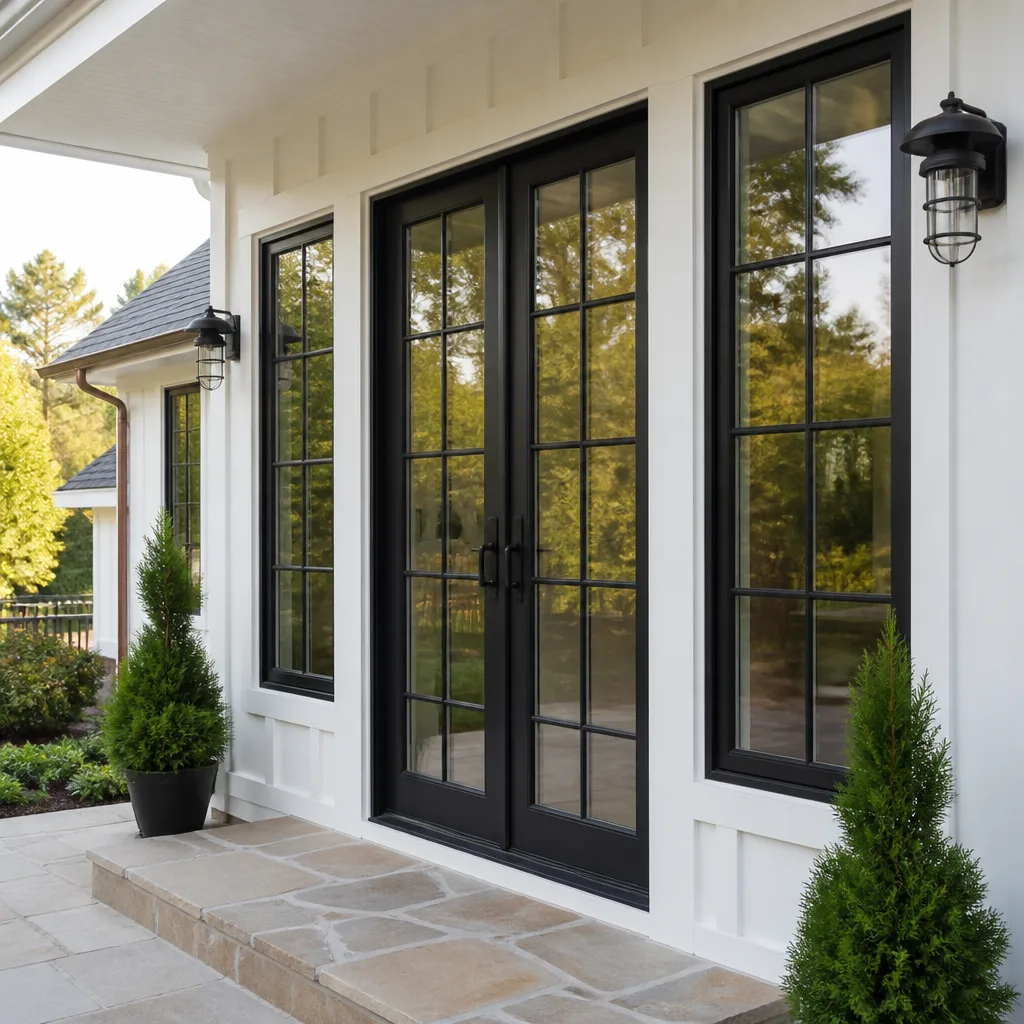
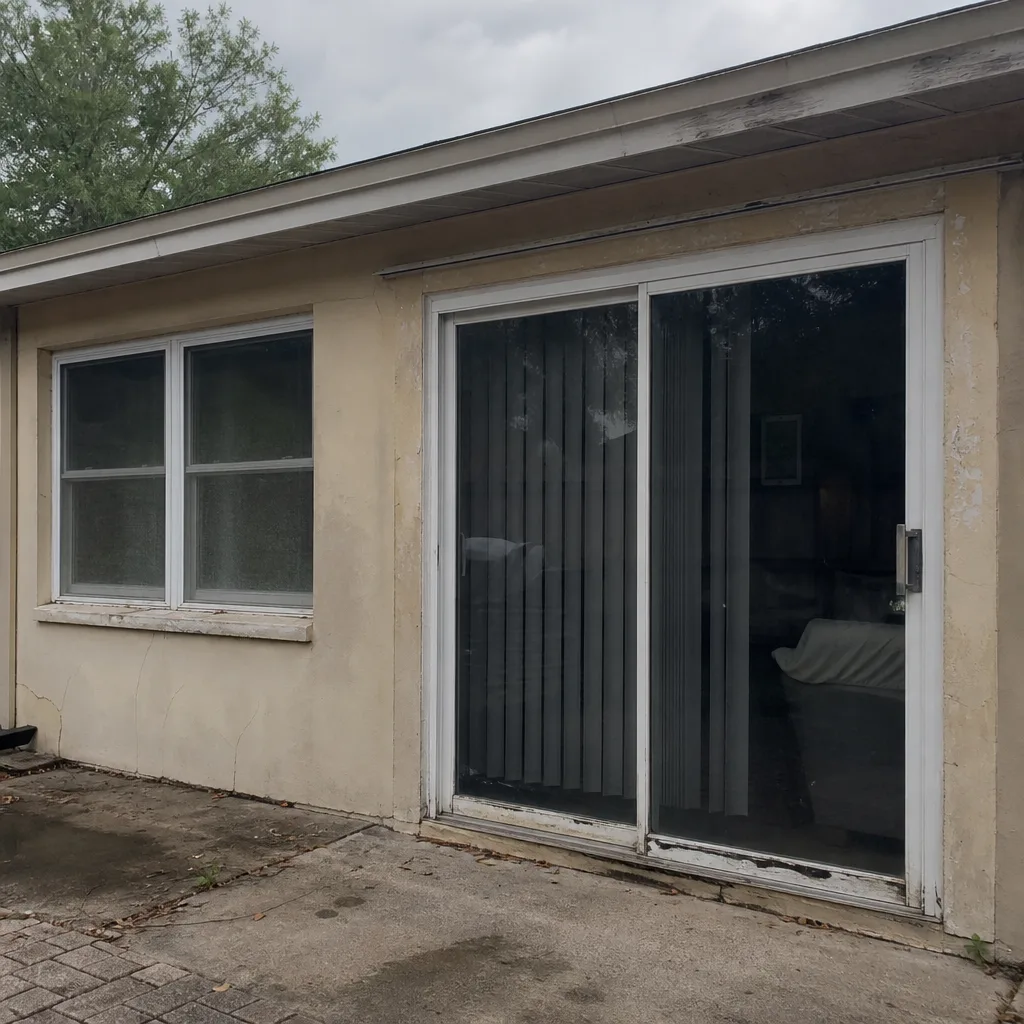 Before
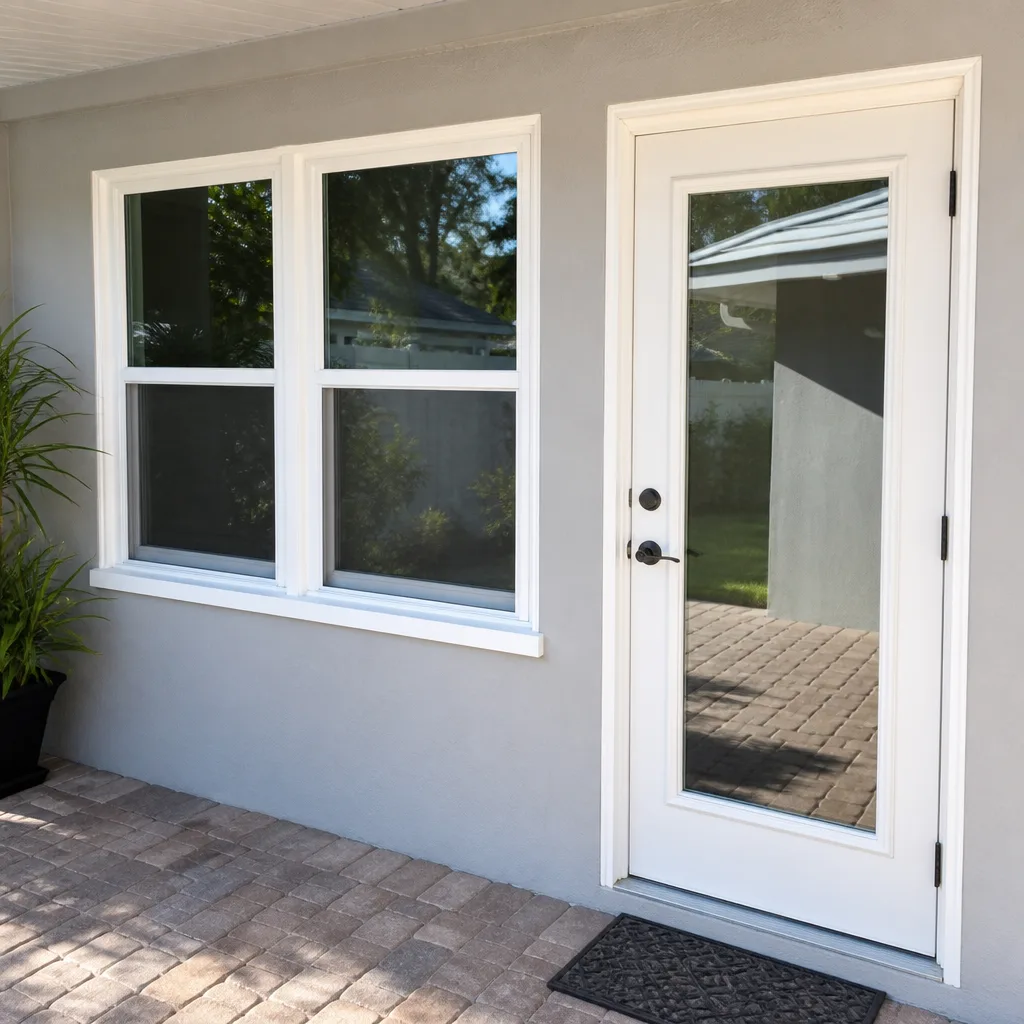 After
After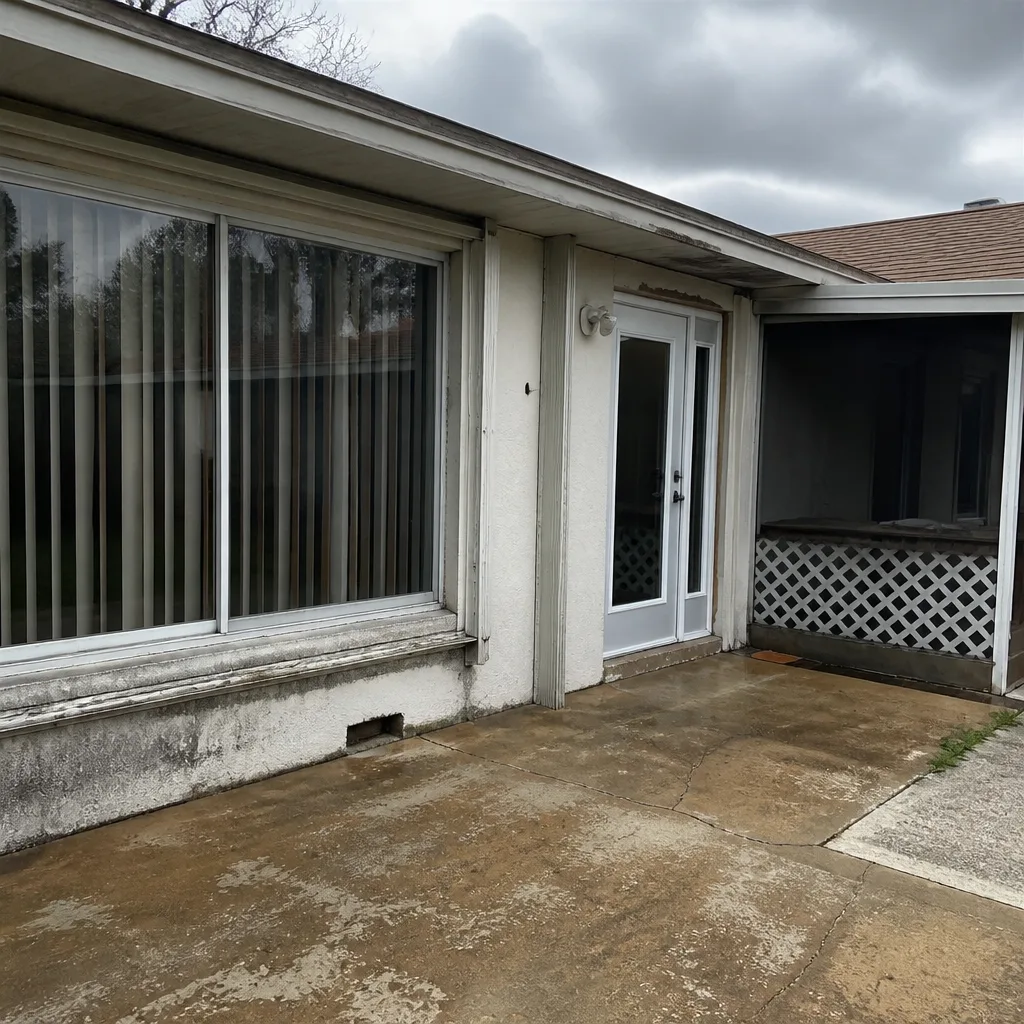 Before
 After
After Before
 After
AfterWindows & Doors Warning Signs: A Tampa Homeowner’s Reference Guide
A fogged double-pane window isn’t just ugly. It means the insulating argon gas between the panes has escaped, your U-factor has likely doubled, and your energy bill has been silently inflated for months while the problem masquerades as a cosmetic nuisance. In Tampa’s climate, that’s not a slow leak of comfort. It’s a slow leak of money, and it started long before the fog showed up. Most homeowners don’t catch these failures early because nobody taught them what to look for. Our Complete Guide to Windows & Doors in Tampa changes that. By the time you finish reading, you’ll know exactly what Tampa’s heat, humidity, and salt air do to windows and doors, which warning signs matter, which ones are cosmetic, and when to pick up the phone before a $200 fix becomes a $2,000 replacement.
Quick Answer
The most common early warning signs for Tampa windows and doors are: condensation or fog between double panes (failed seal), visible daylight around a closed door, windows that stick or won’t open smoothly in summer, chalky white residue on aluminum frames, and a door that suddenly lets in more street noise than it used to. In most cases, these appear 18 to 36 months before the full failure that forces a replacement. Acting early keeps repairs in the $150-$400 range; waiting often pushes you into replacement territory that runs into the thousands. Below, each sign is broken down by cause, what it looks like, and what it costs if ignored.
Table of Contents
- Fogged Glass and Failed Seals: The First Domino
- The Four Visual Stages of Frame Oxidation in Tampa’s Salt Air
- Why Your Window Is Hard to Open in Tampa Summer
- Drafty Doors: Sweep, Threshold, or Warped Slab?
- The 10-Minute Candle Test for Air Infiltration
- Sound as a Diagnostic: What Traffic Noise Tells You About Impact Glass
- Common Mistakes to Avoid
- When to Call a Professional
- Frequently Asked Questions
Fogged Glass and Failed Seals: The First Domino
Double-pane and triple-pane windows are built around a sealed air space between two sheets of glass. That space is filled with an insulating gas, usually argon, and the whole assembly is sealed around the perimeter with a flexible sealant. When that seal fails, the argon leaks out over the course of weeks or months. The result is a window that looks foggy, hazy, or shows moisture droplets between the panes that you can’t wipe away from either side. In Tampa, we see this most often in west-facing windows on homes within two miles of the bay, where direct afternoon sun and salt-laden humidity gang up on aging seals.
Here’s the part most homeowners miss: the fog is the last stage, not the first. Before visible condensation appears, the gas is already gone, and the window’s insulating performance has dropped by 50% or more. The room’s temperature regulation shifts subtly. The air conditioner runs a little longer. The window feels warmer to the touch on a hot afternoon. No one notices these things. But the fog? That’s the undeniable evidence that the failure started months earlier.
The fix depends on how many panes are affected and the age of the unit. In many cases, replacing just the insulated glass unit (the “IGU”) is a straightforward repair that keeps the existing frame. On older aluminum-frame windows from the 1990s and early 2000s, we often recommend a full window replacement in Tampa instead, because the frame itself has likely reached the end of its useful life and repairing a failing IGU in a failing frame is throwing good money after bad. If you are planning an upgrade anyway, impact windows in Tampa from brands like PGT and CGI are a natural step up. These carry heavy laminated glass and reinforced frames that stand up far better to the salt-air environment than standard builder-grade units.
What to do: If you spot fog between panes, note the room and count how many windows are affected. This is not a cleaning issue. It is a seal failure. The free estimate from Winslow Windows & Doors home service will tell you whether an IGU swap or a full replacement makes more sense, and we’ll show you the math either way.
The Four Visual Stages of Frame Oxidation in Tampa’s Salt Air
Aluminum window and door frames are common in Tampa, especially on homes built before 2010. Aluminum is strong and rigid, which makes it a reliable structural material, but it oxidizes. In coastal and near-coastal environments like Tampa Bay, salt in the air accelerates that oxidation dramatically. It’s not a binary “fine or ruined” situation. It happens in four recognizable stages, and the earlier you catch it, the more options you have.
Stage 1: Surface chalking. The frame looks dull or has a white, powdery residue that comes off on your finger. This is purely cosmetic. The metal’s structural integrity is intact. A cleaning product designed for oxidized aluminum will restore the finish. If you see chalking on a window that’s less than eight years old, make a note to keep checking it every six months, because in a salt-air corridor, progress can be quick.
Stage 2: Pitting begins. Tiny, pinhead-sized divots appear in the metal, especially along the bottom rail where salt water collects after rain. You can feel them with a fingernail. At this stage, the frame is still fully functional, but the protective anodized or powder-coated finish has been breached. This is the last stage where a restoration product can meaningfully slow things down. If your home is within a mile of the water, pitting can arrive within five years on unprotected aluminum.
Stage 3: Flaking and scale. The oxidation turns crusty. White or gray scale builds up in corners and along the sill track. The metal underneath is visibly eaten away. The window may begin to bind or drag because the frame geometry has shifted. Function is compromised. Repairs at this stage are possible but limited, and most contractors will recommend planning for replacement rather than trying to nurse a failing frame.
Stage 4: Structural pitting and breakthrough. The frame shows holes, deep cavities, or cracked sections at joints and corners. The window no longer seats properly. Water finds its way into the wall cavity. This is a full replacement situation, no exceptions. We have seen Stage 4 frames in South Tampa bayfront homes where the windows were less than 15 years old, because the original units were never rated for a salt-air environment.
Homes on Davis Islands, Bayshore Boulevard, and the Westshore district near the bay are in the high-exposure zone. Homes further inland in Carrollwood, New Tampa, and Temple Terrace have more time between stages, but the same process is always at work. If you catch pitting at Stage 2, you can often reset the clock for a few more years. If you wait until Stage 4, the wall framing around the window often needs repair too, which adds real cost you never saw coming.
Why Your Window Is Hard to Open in Tampa Summer
We hear this one constantly: a homeowner says their window is easy to open all winter, then gets sticky when summer settles in. They blame humidity. Their neighbor blames the house settling. The truth is usually simpler and more specific. Vinyl, aluminum, and wood all expand when they get hot, but they expand at different rates. A properly installed window has a small clearance gap between the sash and the frame, designed to absorb that expansion. When that clearance is wrong, because the window was measured wrong, installed out of square, or the opening itself has shifted, the frame has nowhere to go. It compresses against the sash, and the window binds.
This is not something to fix with lubricant. Spraying a sticky summer window with silicone lube is a temporary bandage for a geometric problem. The real issue is that the window has lost its expansion clearance, or it never had enough to begin with. In Tampa, the daily thermal swing in July and August, from a 76-degree air-conditioned interior to a 130-degree sun-baked exterior surface, puts enormous strain on every window in the house. If the clearance is too tight by even a few millimeters, the window will bind every single afternoon.
There is one other cause worth checking before you call a contractor: the home itself. Houses in Tampa are built on a mix of sandy soil, limestone, and reclaimed land, and they do shift. If one window sticks, you likely have an installation or frame issue. If three or four windows on the same wall suddenly develop the same problem, the wall header may have settled or shifted. That’s a structural signal, and it’s worth having a qualified eye on it. Window installation in Tampa is a specialized trade precisely because our climate and soils punish small mistakes that would go unnoticed in Kansas. A professional will check the reveal gap with a shim gauge and tell you in twenty minutes whether you are dealing with normal expansion or a mounting problem that needs correcting.
Drafty Doors: Sweep, Threshold, or Warped Slab?
When a homeowner says “the door doesn’t seal right,” it can mean three completely different failures. Each has a different cause, a different repair path, and a different cost. Diagnosing the right one keeps you from paying for the wrong fix.
1. Failing door sweep. The sweep is the flexible strip on the bottom of the door slab. It’s a consumable. Tampa’s heat dries out the rubber or vinyl compound over three to five years, and the sweep curls, cracks, or loses its contact with the threshold. You can see daylight under the door, feel a breeze at ankle level, and watch bugs march in. The fix is typically under $50 in materials and about 15 minutes of labor. This is a wear item, not a structural problem. We recommend checking every exterior door sweep every spring, before hurricane season, because a worn sweep is also an open invitation for wind-driven rain.
2. Settling threshold. The threshold is the raised piece under the door that the sweep presses against. When the threshold settles, often because the concrete slab or wood subfloor beneath it has shifted, the door can still be perfectly straight, but a gap opens at one end. The door “seals great on one side and leaks on the other.” This is very common in Tampa homes with slab foundations on expansive clay or shifting sandy fill. The diagnostic tell: open the door and look at the gap between the door bottom and the threshold. If it’s wider at the strike side than the hinge side, you have a threshold adjustment or a slab movement issue. Adjustable thresholds can be raised in minutes. A badly settled threshold may need shimming or replacement.
3. Warped slab. The slab is the door itself. In Tampa’s humidity, wood slabs absorb moisture from the air on the exterior side while staying drier on the interior side. That imbalance causes the door to bow. You’ll notice the door touches the frame at the top corner but leaves a gap at the bottom, or vice versa, and the pattern changes with the seasons: worse after afternoon thunderstorms, better after a dry spell. A warped slab cannot be repaired. It gets replaced. The good news is that replacement doors from Therma-Tru, one of the brands we install, are engineered with composite cores that expand and contract far less than solid wood in Tampa’s humidity. This is exactly why we recommend them over builder-grade wood slabs that look fine the day they are hung and warp within two years.
One test covers all three: close the door on a sunny day, kneel down, and run your hand along the bottom edge. If you feel air at the very bottom, it’s the sweep or threshold. If you feel it at the top corner, it’s likely a warped slab. If it’s drafty around all four edges, the door was probably never properly weather-stripped, or the jamb has shifted out of square.
The 10-Minute Candle Test for Air Infiltration
Air leaks around windows and doors are invisible in daylight and silent most of the time. But they show up as real money on your Florida Power & Light bill every month. The DOE estimates that air infiltration around windows and doors accounts for up to 30% of a home’s heating and cooling costs. In Tampa, where air conditioning runs from March through November, that’s not a small number. Here is a test any homeowner can perform in ten minutes with a candle and a helper.
- Wait for a day with at least a light breeze outside. The test is much more effective with a pressure differential.
- Turn off all ceiling fans, portable fans, and the AC handler. Moving air inside the house will give you false positives.
- Close all windows and exterior doors. Leave interior doors open so the pressure equalizes.
- Light a thin taper candle or a stick of incense. The thinner the smoke stream, the easier the reading.
- Walk slowly around the perimeter of each window and door, holding the flame or smoke stream about two inches from the edge of every seam, the meeting rails, and the corners.
- Watch for the flame to flicker or the smoke to bend away from the opening. That’s your leak.
- Mark each leak with a small piece of painter’s tape, then move on.
In our experience on Tampa homes, the most common leak points are the bottom corners of double-hung windows, where the sash meets the sill, and the strike-side top corner of entry doors, where the weatherstripping has compressed over years of slamming. These are also the two places where $20 of weatherstripping can knock a noticeable amount off your cooling bill. If you find leaks in the middle of a window frame, between the frame and the wall, that’s a more serious problem. It means the original installation was never properly flashed or insulated, and fixing it usually means pulling the interior trim to address the rough opening. On older Tampa homes, we find this more often than anyone wants to admit, especially on windows that were replaced by the previous owner’s “handyman with a good price.” If you’re weighing whether to tackle fixes yourself, our DIY vs Professional Windows & Doors guide breaks down what actually makes sense to handle solo.
Sound as a Diagnostic: What Traffic Noise Tells You About Impact Glass
Here’s a diagnostic tool almost nobody talks about: your ears. Impact-rated windows from PGT, CGI, and CWS are built with a thick interlayer of laminate between two panes of glass. That interlayer is what holds the glass together when a hurricane hurls a 2×4 at your home at 100 miles per hour. But it does something else too: it dampens sound transmission significantly. Homeowners who upgrade to impact glass routinely report a dramatic drop in traffic noise, rain noise, and lawn equipment noise.
The reverse is also true. If you own impact windows and you notice a sudden or gradual increase in noise, something has changed in the glass assembly. The most common culprit is delamination, where the laminate interlayer begins to separate from the glass panes at the edges, usually starting in the lower corners where heat and moisture concentrate. Delamination shows up visually as a milky haze or a silvery line creeping inward from the frame edge, but before you can see it, you may hear the difference. The window simply stops blocking sound as effectively because the acoustically dead layers are no longer bonded.
Traffic noise is the easiest baseline to use in Tampa. If you live near Dale Mabry Highway, Gandy Boulevard, or Interstate 275, you know the background level on a weekday morning. If a west-facing impact window starts letting in noticeably more roar, that’s worth investigating. It could be a failed seal that has allowed the interlayer to oxidize. It could also be a slipped gasket or a gap at the frame that opened as the building shifted. None of these fix themselves.
The good news is that a properly installed, high-quality impact window has a projected service life measured in decades. We install PGT, CGI, and CWS for the simple reason that they consistently outperform lesser-known options in our climate. When a customer tells us they can suddenly hear more of the street, we treat it as a warranty issue until proven otherwise. If you are noticing this on a window that’s under ten years old, the next call should be to whoever sold it. If that warranty has expired or the installer is gone, a local professional can tell you quickly whether it is a repairable seal or a replacement situation. Not sure how to choose one? Our step-by-step guide to hiring a windows and doors contractor in Tampa walks you through exactly what to ask.
Common Mistakes to Avoid
- Ignoring fog because it’s “not that bad.” Fog means the thermal seal has completely failed. The window is now doing nothing for your energy bill, and the problem will not reverse itself. Every week of delay is a week of paying for climate control that’s leaking through the glass.
- Lubricating a sticking window without checking the clearance gap. If the frame or opening has shifted, lubricant only masks the symptom while the underlying geometry continues to bind. In a Tampa summer, that can lead to a shattered pane when the frame compresses against the glass at the wrong angle.
- Caulking all four sides of a window from the outside without checking the weep holes. Every window has drainage channels at the bottom that let condensation escape. Seal those with caulk and you’ll trap water inside the frame, accelerating oxidation and rot. We see this on dozens of Tampa homes every year after well-meaning DIY projects.
- Assuming a drafty door needs a new door. As covered above, three separate problems all present as “the door doesn’t seal.” A $40 sweep replacement solves one, a threshold adjustment solves another, and only the warped slab requires a new door. Diagnosing before you buy saves hundreds.
- Replacing only the window with the visible problem. If one west-facing window on a run of five has failed, its neighbors are almost always close behind. Replacing one window at a time often costs more per window and leaves you with mismatched glass packages. At minimum, have the others inspected the same visit.
- Choosing a replacement window based on price alone in a salt-air environment. Tampa is not a neutral market. Standard aluminum frames from inland suppliers can hit Stage 2 oxidation within a few years near the bay. Windows rated for coastal use cost more up front because they are built with materials that survive the environment.
- Waiting until hurricane season to act. Every contractor in Tampa is stretched from June through September. If you identify an issue in the dry season, November through April, you will get better scheduling and more careful work. Failure never respects the calendar, but planning does.
When to Call a Professional
Some signs are unambiguous. Structural pitting on aluminum frames, fog between panes that you’ve confirmed is not surface condensation, a door that visibly flexes when you press on it, or windows that have shifted enough to crack the surrounding drywall are all situations that need a pro with the right training and tools. These are not DIY projects, and the cost of a wrong guess is high. If you are touching the rough opening, pulling a window to reset the flashing, or working on impact-rated glass, call someone who does this every week. Winslow Windows & Doors offers free estimates in Tampa, and Ed Winslow’s name is on the door and on every job we do. Call (386) 559-6999 if you want a straightforward assessment, no pressure, and a written line-item price. The estimate is free whether or not we ever do a single day of work for you.
Frequently Asked Questions
Simple repairs like weatherstripping, a door sweep, or a sash balance typically run $75 to $250 per window in the Tampa market. An insulated glass unit replacement usually falls between $200 and $500 per pane, depending on size and glass type. Full window replacement runs from $700 to $1,800 per opening for mid-range units, and $2,000-plus for premium impact-rated windows. Call (386) 559-6999 for an exact quote on your specific windows, estimates are free, and Winslow offers $40 off any repair over $200 as a standing discount.
Interior condensation on the room side of the glass is usually a humidity issue, not a window failure, especially common in Tampa during the cooler months when the AC runs less. The dew point inside the house is high enough that moisture condenses on the cooler glass surface. If the condensation wipes away with a cloth, it’s on the inside surface and is not a seal failure. If the moisture is between the two panes and cannot be wiped, that’s a failed seal and an argon gas leak. Call us if you’re unsure which one you’re seeing.
Quality impact windows from brands like PGT, CGI, and CWS are designed with a 20-to-30-year service life, but Tampa’s salt air and intense UV exposure shorten the cosmetic life of frames and seals. In near-bay locations, the interlayer itself typically lasts as long as the building, but the frame finish and the interior gaskets often need attention around year 12 to 15. Annual visual inspection of weep holes, seals, and frame corners is the cheapest insurance you can buy for impact windows.
You can absolutely repair or replace a single window. We do it regularly in Tampa. The question is whether a single-unit fix makes financial sense when its neighbors are aging at the same rate. If the rest of the windows show Stage 1 chalking or early pitting, you may be better served replacing a full elevation at once and getting consistent glass, better bulk pricing, and a uniform warranty. We’ll show you both options and let you decide. Call (386) 559-6999 for a free second opinion on any written estimate you’ve already received.
The dry season, November through April, is the most predictable window for exterior work in Tampa. Temperatures are moderate, rain delays are rarer, and contractors have more scheduling flexibility. It’s also the smartest time to prepare for hurricane season, which peaks in August and September. That said, we operate year-round and answer the phone 24/7, so if you need work done in July, we’ll be there.
Yes. Any window or door replacement that changes the size of the rough opening, involves structural framing, or requires impact-rated compliance triggers a permit in the City of Tampa and Hillsborough County. Winslow Windows & Doors handles the permit process for our customers and ensures the final inspection is passed before we call the job complete. It is part of the job, not an add-on. If a contractor tells you permits aren’t necessary on an impact window install in a high-velocity hurricane zone, get a second opinion immediately.
The Bottom Line
Tampa’s climate does not make windows and doors fail. It reveals which ones were never right to begin with, and it does it on a schedule that runs 18 to 36 months ahead of the obvious breakdown. The fogged pane, the sticking summer window, the drafty corner, and the sudden traffic noise are all messages from the building, and they are legible once you know the language. Check your frames for oxidation stages, run the candle test on a breezy day, and start treating seal and sweep failures as maintenance items instead of emergencies. For more guides & resources on protecting your home, visit our blog. The homeowners who catch these signs early spend hundreds. The ones who wait spend thousands. The one down the road is glad to help you figure out which path you are on.
Written by Ed Winslow, Owner at Winslow Windows & Doors, serving Tampa since 2011.
Six Reasons Homeowners Choose Winslow Windows & Doors
Impact systems engineered to design pressures up to +/-100, matched to your wind zone - your openings hold when the storm arrives.
Low-E insulated impact glass from our manufacturer lines commonly cuts monthly cooling bills 20-30%.
Laminated impact glass shuts out up to 40% of outside noise - traffic, neighbors, weather.
Monitoring services run $30-90 a month. Laminated impact glass resists forced entry around the clock, with no subscription.
Florida homeowners average around 25% savings on the windstorm portion of their policy after protecting every opening - some homes qualify for more.
A full impact package upgrades curb appeal, buyer confidence and appraised value in one project.