
Last updated August 27, 2026
Free in-home measure and quote - PGT, CGI and CWS impact lines compared on your actual openings, style by style



 Before
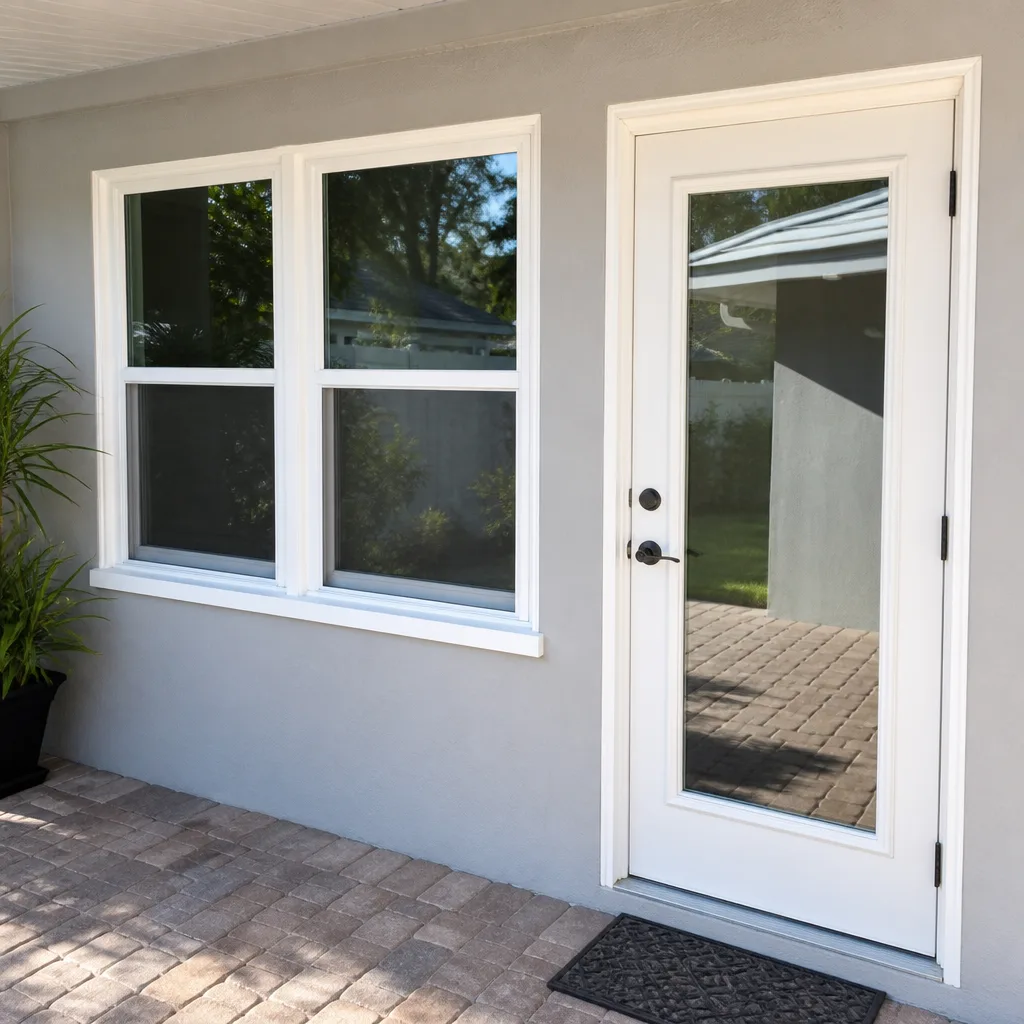 After
After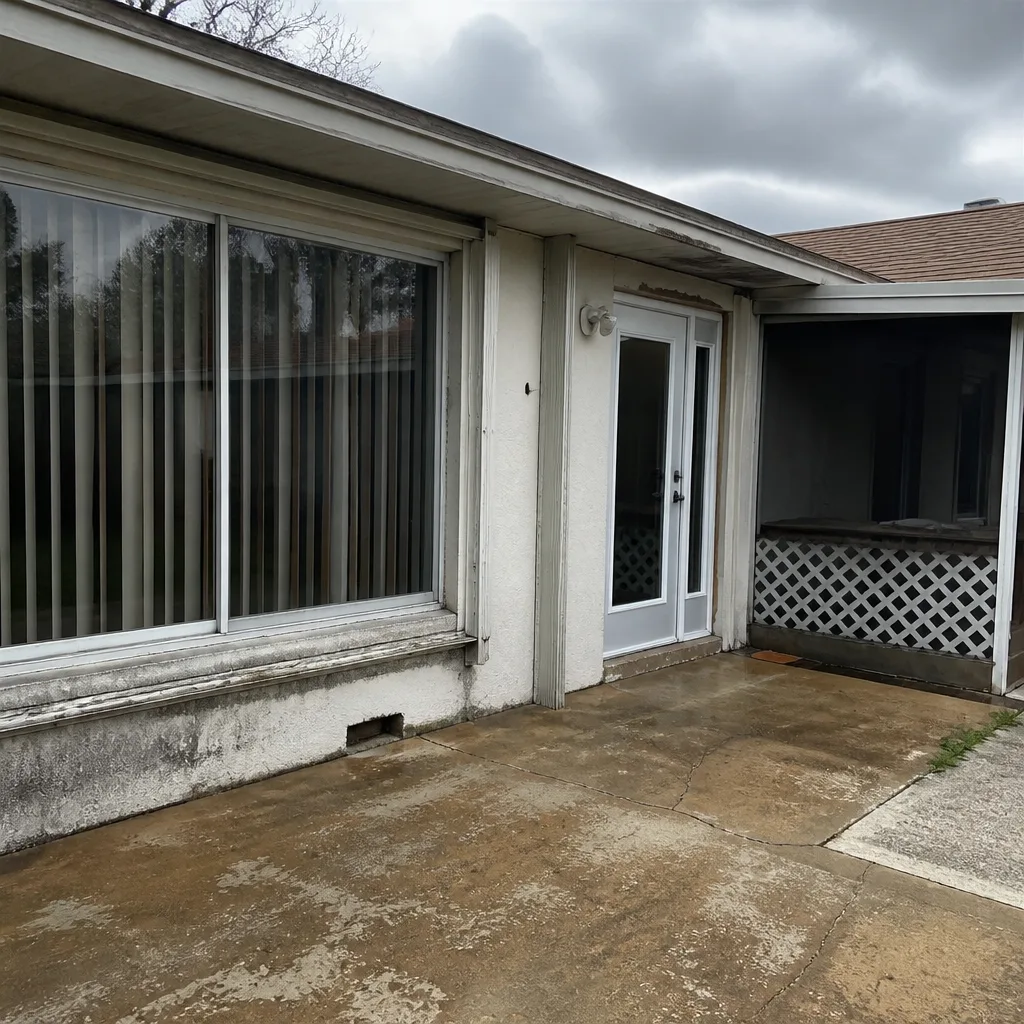 Before
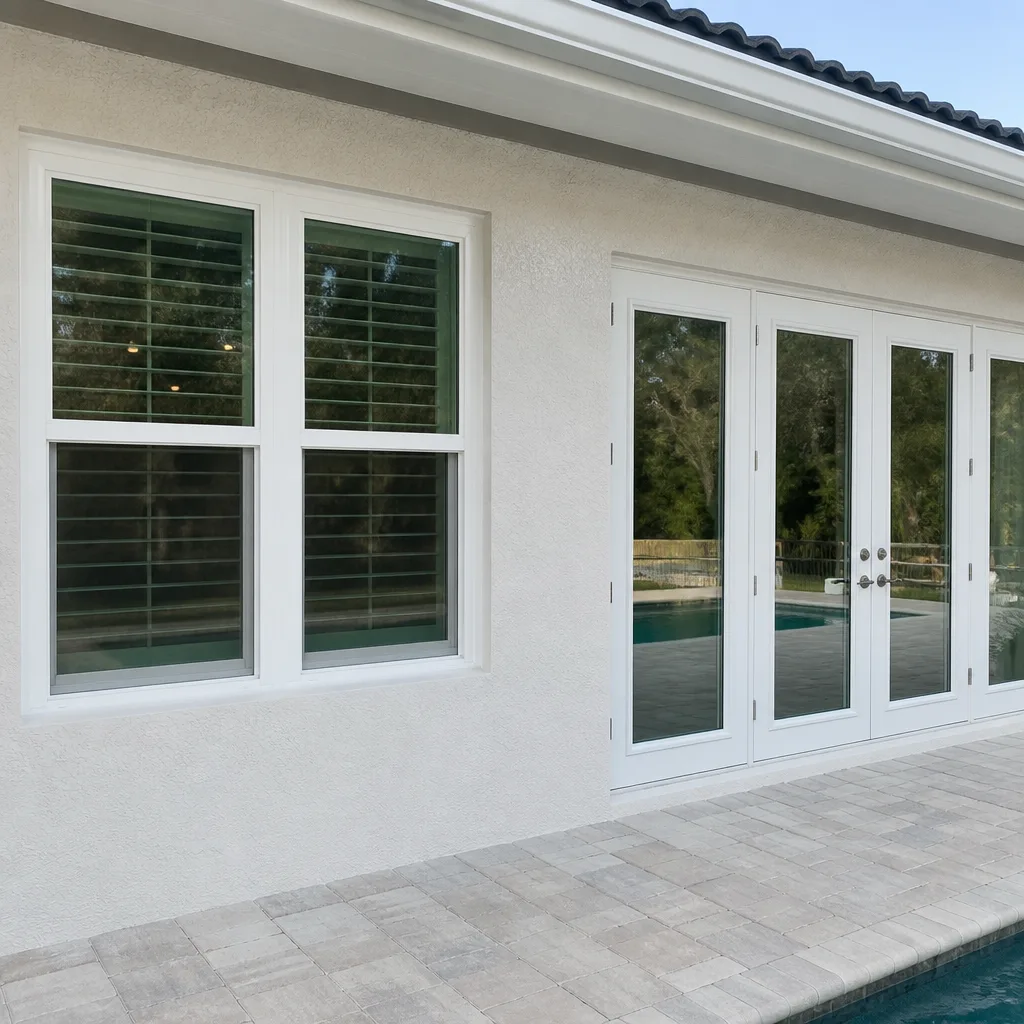 After
After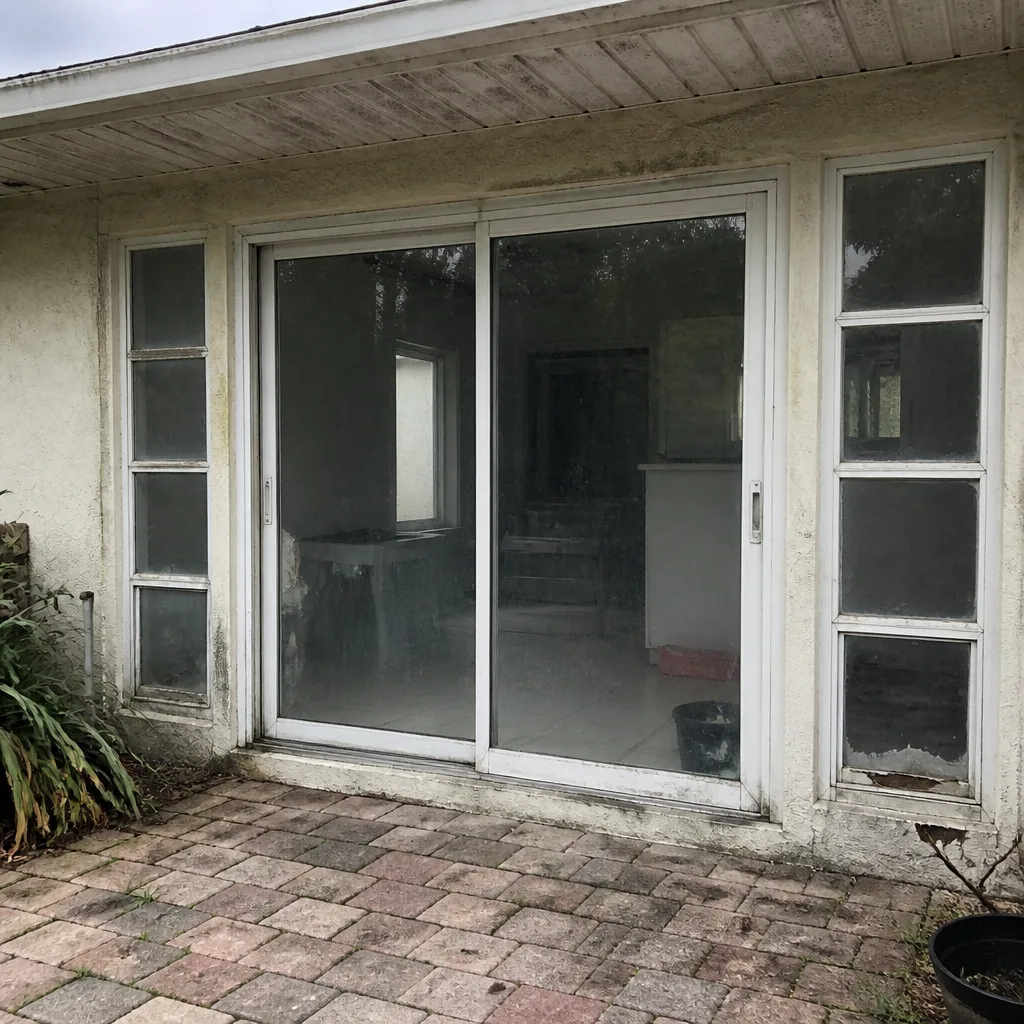 Before
 After
AfterSeasonal Windows & Doors Care for Tampa: Year-Round Homeowner’s Guide
Here’s a counterintuitive fact we’ve learned in more than 15 years of working on Tampa homes: the most destructive day for your windows isn’t the day a hurricane makes landfall. It’s roughly six weeks later, when the adrenaline has faded and nobody is looking. That’s when salt deposits from storm surge and wind-driven spray have had time to crystallize into aluminum frames, when debris packed into screen tracks has started holding moisture against wood and vinyl, and when weatherstripping compressed during last-minute shutter installation stays compressed, leaving gaps that quietly leak conditioned air for the next eight months. This guide maps window and door care to Tampa’s actual weather pattern, not the generic spring-fall checklist written for Ohio, and points you to more guides & resources for year-round home maintenance. You’ll learn what to do, when to do it, and which two months of the year give you the only reliable window for one critical repair.
Quick Answer
Seasonal window and door care in Tampa means adapting to two punishing seasons (windy dry spring, rainy summer/fall) and two mild ones (post-storm recovery, low-humidity winter). The highest-priority tasks are clearing weep holes and screen tracks in March and April, testing weatherstripping and threshold heights before June, rinsing salt off frames within 72 hours after any named storm, and scheduling caulk or sealant work only in the dry December-to-February window when exterior sealant actually bonds correctly in Florida’s humidity. For a detailed look at what these projects cost, see our Windows & Doors Cost Breakdown: The Tampa Homeowner’s Reference for 2026.
Table of Contents
- Tampa’s Real Seasons: What Actually Stresses Windows and Doors
- March Through May: Dry-Season Wind, Pollen, and the Weep Hole Problem
- June Through September: Storm Prep and the Threshold Adjustment That Stops Door Flooding
- October and November: The Post-Storm Salt Protocol
- December Through February: Tampa’s Only Reliable Caulk Season
- Year-Round UV Management: Why South- and West-Facing Glass Ages Faster in Tampa
- Common Mistakes to Avoid
- When to Call a Professional
- Frequently Asked Questions
Tampa’s Real Seasons: What Actually Stresses Windows and Doors
Tampa doesn’t get four equal seasons. It gets two long, aggressive ones and two shorter, deceptively calm ones. Each puts a different kind of mechanical stress on window and door assemblies, and the maintenance response that works in one season is often useless or even harmful in another.
The dry season (roughly late October through May) brings persistent northeast and east winds, low humidity, and airborne pollen from oak, pine, and grass. The wind carries fine particulates that settle into screen frames, window tracks, and the tiny drainage channels called weep holes. Because it’s dry, the debris sits loose. Then the rain arrives.
The wet season (June through September) brings daily afternoon thunderstorms, humidity above 80 percent, and the threat of tropical systems. When the first heavy rains hit, all that dry-season debris in your weep holes turns into a paste that blocks the channels designed to drain water from the window frame. Blocked weep holes are one of the most common causes of interior water staining we see in Tampa, and most homeowners don’t realize it started months earlier, during the dry season.
Then there are the two transitional windows that most guides ignore entirely:
- October and November are recovery months after hurricane season. If a named storm passed anywhere near Tampa Bay, coastal homes have salt on every exterior surface. If you don’t rinse it, corrosion accelerates through the dry winter.
- December through February offers something rare: sustained low humidity. This is the only period in Tampa when exterior caulk and sealant can cure properly. Do this work in July and you’re bonding to a damp surface, which is a failure waiting to happen.
At Winslow Windows & Doors home, we’ve structured our service calendar around this reality since 2011. The maintenance schedule below follows the same logic: work with the weather, not against it.
March Through May: Dry-Season Wind, Pollen, and the Weep Hole Problem
The biggest threat to Tampa windows from March through May isn’t water. It’s debris. Sustained winds off the Gulf and the bay push pollen, dust, and fine sand into every horizontal surface on your window and door assemblies. The damage doesn’t happen in spring. It happens in June, when the first heavy rains turn that debris into a blockage.
Here’s the maintenance sequence we recommend for this period, in order of importance:
- Clear every weep hole on every window and sliding glass door. Weep holes are small drainage slots on the exterior bottom edge of the frame. Use a bamboo skewer or a pipe cleaner. Never use metal, which scratches the frame coating and creates a corrosion point. If water can’t drain from the track, it will find its way inside your wall.
- Remove and inspect all screens. Pollen cakes onto screen mesh and reduces airflow by as much as 30 percent by late spring. Rinse screens with a garden hose and a soft brush, then check the frame corners for separation. A screen that rattles in its track is telling you the spline is failing, and a torn screen is an open invitation for the insects that explode in population after the first spring rains.
- Lubricate window tracks and door rollers with a dry silicone spray. Avoid WD-40, which attracts dust and creates a gritty paste in the track. Dry silicone repels the fine particulate that Tampa’s spring winds blow around. You’re looking for windows and sliding doors that open and close with one hand, not two.
- Check weatherstripping on doors for compression set. Compression set is when the rubber or foam strip loses its ability to spring back after being squeezed. If you can see permanent flat spots or daylight around your door, it’s time for replacement. The dry season is actually a good time to do this because the material isn’t swollen with humidity.
A note on noise in this season: if your windows rattle in the frame during spring wind gusts, that’s often a sign that the sash balances are worn and the sash is no longer held tight against the frame. It’s not just annoying. Loose sashes allow air and water to bypass the weatherstripping. If you can move the sash side to side with two fingers, it needs attention. For homeowners considering new Window Installation in Tampa, spring is the most popular season, and for good reason: low humidity means sealants cure faster and you’re not rushing to beat a storm.
June Through September: Storm Prep and the Threshold Adjustment That Stops Door Flooding
Hurricane season officially starts June 1, but the daily afternoon thunderstorms typically arrive first. These routine deluges cause more door flooding in Tampa than named storms do, because they happen dozens of times per season and people don’t prepare for them the way they do a hurricane. Our Windows & Doors Warning Signs: A Tampa Homeowner’s Reference Guide covers what to watch for before water damage starts.
The single most effective adjustment you can make before the rainy season is checking your exterior door threshold height and sweep alignment. Here’s the step-by-step that stops most door flooding:
- Close the door and look at the gap under it from inside. You should see no daylight. If you do, the sweep is worn or the threshold is too low.
- Test the sweep with a dollar bill. Close the door on the bill. If it pulls out with no resistance, the sweep isn’t making contact. Replace it. Sweeps are removable, and the hardware store replacements cost less than twenty dollars.
- Check whether the threshold is adjustable. Many modern thresholds have adjustment screws along the top that let you raise or lower the center deck. Even a quarter-inch raises the barrier enough to stop wind-driven rain from pushing under the door during a heavy band of rain. If your threshold is fixed and the gap is consistent, the door was likely installed wrong, and the fix may require resetting the slab.
- Inspect the weatherstripping along the sides and top. After a decade of Tampa summers, rubber strips harden and crack. Press on them. If they feel stiff instead of springy, replace them before the wettest months.
Before a named storm approaches, do a hardware check on every opening:
- Tighten all hinge screws. Loose hinges cause the door to sag, which breaks the sweep contact and lets water in at the bottom corner.
- Test every window lock. A window that doesn’t lock isn’t just a security issue. An unlocked window has a larger gap in the seal, which means more wind-driven water penetration and more air leakage. In Tampa’s thunderstorms with 40-plus mile-per-hour gusts, that gap matters.
- If you have impact windows, verify the labels are intact and legible. Insurance discounts usually require the label to be present.
For homeowners without impact-rated protection, Impact Windows in Tampa are the most common upgrade we install heading into storm season. We install PGT and CGI products, both made in Florida and engineered for the specific wind loads in our region. If you’re considering impact windows, the earlier in the season you order, the better. Summer is our busiest installation period, and lead times on premium brands stretch as storms approach.
October and November: The Post-Storm Salt Protocol
If you live within a few miles of Tampa Bay or the Gulf, and a named storm passed anywhere near the bay region, your windows and doors are coated in salt. It’s invisible after the rain dries, but it’s there. Salt residue reacts with aluminum frames and hardware through a process that never stops as long as moisture is present. In Tampa’s alternating wet-dry cycle, that means corrosion keeps restarting all winter.
The salt-rinse protocol is simple but time-sensitive:
- Within 72 hours of the storm clearing, rinse every exterior window, door, and frame with fresh water. Use a garden hose on a gentle setting. The goal is to dissolve and wash away salt crystals before they bond to the surface. Waiting longer than 72 hours in Tampa’s warm temperatures allows the salt to etch into the finish.
- Pay close attention to tracks, hinges, and hardware. These areas trap salt water in crevices where it evaporates slowly and leaves concentrated deposits behind. Rinse them thoroughly, then wipe dry with a clean cloth.
- After rinsing, apply a dry silicone lubricant to hinges, rollers, locks, and tracks. Salt removes the lubricant that keeps these parts moving smoothly. If you skip this step, you’ll notice squeaking and stiffness within a few weeks.
- Inspect the sealant around the frame exteriors. Storm winds can flex window and door frames enough to crack older, brittle caulk. Run a bead of fresh sealant around any gaps you find, but only if the weather is dry and the surface is clean. In October, morning dew can interfere with adhesion, so do this work in the afternoon when surfaces are warmed and dry.
Coastal homes are the highest priority, but even homes in New Tampa or Temple Terrace get wind-carried salt from bay storms. The effect is lighter but still measurable over years. We inspect windows across Tampa every week, and the coastal-versus-inland corrosion difference is stark: South Tampa, Davis Islands, and Beach Park homes show hardware wear in 10 years that inland homes don’t show for 20.
If you find frame corrosion, loose hardware, or evidence that water got inside the wall, don’t wait to address it. Moisture in wall cavities creates the exact conditions for mold, and by the time you see interior staining, the damage has been developing for months. For homeowners evaluating whether repair or replacement makes more sense, our Window Replacement in Tampa guide walks through the decision factors specific to our climate and building codes.
December Through February: Tampa’s Only Reliable Caulk Season
Here’s something most Tampa homeowners don’t know: exterior caulk and sealant needs sustained low humidity to cure properly, and Tampa only reliably provides that from December through February. Summertime relative humidity in the 80 to 95 percent range means sealant applied to exterior surfaces dries slowly, collects moisture during the cure, and fails prematurely. You’ll see the evidence: cracked, peeling caulk within a year of application.
Why the cold matters less here than humidity: Most caulk and sealant manufacturers specify application temperatures above 40 degrees, which Tampa meets year-round. The limiting factor is moisture. A warm, damp surface in July looks dry to the touch but holds enough surface moisture to compromise adhesion. A 65-degree, dry January afternoon is ideal.
Here’s your winter checklist:
- Inspect every exterior bead of caulk where the window or door frame meets the stucco, siding, or brick. Look for cracks, gaps, or areas where the caulk has pulled away from either surface. Press on it. Old caulk feels hard and brittle. If it flexes, it’s still doing its job.
- Check glazing putty on older single-pane wood windows. If putty is falling out or cracked, moisture gets into the wood and rot follows. This is a winter-appropriate repair because the putty will cure cleanly.
- Examine the sealant joints on the interior of the window where the sash closes against the frame. Interior conditioned air is drier in winter, and this is when you’ll notice leaks that summer humidity masks.
- Test every operable window and door for smooth operation. Winter’s lower humidity causes wood to shrink slightly, which is the best time to identify hardware that’s binding. If a window is difficult to open in January, it will be worse in August when everything swells.
This is also the smart season to schedule replacement work in Tampa. Installation crews aren’t fighting afternoon thunderstorms, sealants cure correctly on the first pass, and you avoid the summer rush. If you’ve been considering upgrading to energy-efficient windows or replacing a damaged door, scheduling between December and February typically gets you the most flexible calendar. We offer free estimates year-round, and the winter window is genuinely the most pleasant time to do the work.
Year-Round UV Management: Why South- and West-Facing Glass Ages Faster in Tampa
Tampa sits at roughly 27.9 degrees north latitude. That’s far enough south that the sun spends half the year nearly overhead, which creates two consequences that homeowners in Orlando, Jacksonville, or Atlanta don’t experience to the same degree.
First, the solar angle means south-facing glass receives more direct radiation during winter than it does in summer, when the sun passes nearly overhead. Second, west-facing glass catches the late-afternoon sun at a low angle for two to three hours every day, year-round. The combination means south- and west-facing windows in Tampa accumulate UV damage roughly 30 percent faster than identical windows on the north and east sides of the same house.
What UV damage looks like on windows and doors:
- Low-E coating breakdown: a hazy, cloudy appearance in the glass that can’t be cleaned away. It appears first on south- and west-facing glass.
- Fading on interior surfaces: floors, furniture, and window treatments lose color in a pattern that mirrors the window shape.
- Frame chalking: a white, powdery residue on vinyl or painted frames, which is the surface material breaking down under UV exposure.
- Seal failure: fogging between glass panes, indicating that the insulating gas has escaped and the edge seal has failed.
Inspect your south- and west-facing glass every six months. Look at it from the outside on a sunny day, from a slight angle. If you see a milky haze, the low-E coating is failing. If you see condensation between the panes that doesn’t clear, the seal is gone. Both conditions mean the window is no longer doing its energy job, and in Tampa’s climate, the air conditioning penalty accrues immediately.
UV also attacks door finishes. Fiberglass and wood doors facing west fade and chalk faster than any other orientation. If you catch it early, a fresh coat of automotive-grade UV protectant can extend the finish. If the finish has failed and the surface feels rough, it’s time to sand and refinish, or the door substrate starts absorbing water, which leads to warping and delamination.
For windows and doors that have reached the end of their service life on Tampa’s sun-exposed sides, upgrading to modern UV-resistant glass is the permanent fix. We install ViewLux and Therma-Tru products specifically for their Florida-tested UV coatings and frame materials designed for high-solar-load environments.
Common Mistakes to Avoid
- Treating the spring pollen problem with nothing more than hosing down the glass while ignoring the weep holes. The glass cleans easily. The weep holes are where the damage starts, and most homeowners don’t know they exist until water appears on the interior sill.
- Applying caulk or sealant during Tampa’s summer months. Humidity in the 80-plus percent range prevents proper curing, and the work will fail within a year. This mistake alone keeps sealant manufacturers’ warranty departments busy across Florida.
- Waiting until June to check weatherstripping. Once the daily downpours begin, any gap in your door or window seal becomes an immediate leak. The work should be done in the dry spring when materials are stable.
- Skipping the post-storm salt rinse because the windows look clean. Salt residue is invisible after it dries. By the time you see pitting or white powder on aluminum frames, the damage is advanced and often irreversible.
- Using petroleum-based lubricants on window tracks and door rollers. WD-40 and similar products attract dust and pollen, which then forms an abrasive paste that wears out the rolling hardware faster than leaving it alone.
- Assuming impact windows never need maintenance. Impact-rated glass is engineered for wind-borne debris, but the frames, weatherstripping, and tracks age just like any other window. Track failures on impact windows are especially common in beachfront Tampa homes because salt accelerates corrosion on the stainless steel rollers.
When to Call a Professional
Some seasonal maintenance tasks are genuinely DIY-friendly: clearing weep holes, rinsing screens, lubricating tracks. Others are not. Call a professional when you see water staining on the drywall or baseboard below a window, which means the leak is already inside the wall cavity. Call when you find fogged glass, failed seals, or visible frame corrosion, which indicate the window assembly is failing and sealant and anecdotal fixes won’t reverse it. Call when a door is sagging, the threshold can’t be adjusted enough to close the gap, or the frame shows rot at the bottom corners. And call if you live in a coastal Tampa neighborhood and haven’t had a professional frame inspection in more than five years. Your home is fighting an environment that never stops working against the materials on the outside. Winslow Windows & Doors offers free estimates in Tampa - call (386) 559-6999.
Frequently Asked Questions
Clean your weep holes twice a year in Tampa: once in late April or early May, right before the rainy season begins, and once in October after hurricane season has wound down. The timing matters because the work protects against the two periods when water is actively running through the tracks. Call (386) 559-6999 if you’re not sure where your weep holes are located.
The best months for window replacement in Tampa are December through February simply because low humidity allows sealant to cure correctly on the first application, and you avoid summer storm disruptions. However, we install year-round, and impact window lead times before hurricane season are always longer. Schedule early if you want work done before the June-to-September window.
Heavy rain overwhelms the drainage capacity of your door’s threshold, and the water that can’t drain out the weep holes finds the path of least resistance - usually under the door sweep or around the frame. The fix is usually a combination of cleaning the threshold drains, replacing a worn sweep, and adjusting the threshold height. This is one of the most common calls we answer every summer in Tampa.
Salt air affects homes within several miles of Tampa Bay and the Gulf, not just beachfront properties. The effect is strongest within a mile of open water, but wind-carried salt reaches inland during every named storm and during everyday sea-breeze patterns. Homes in South Tampa and on Davis Islands need the most frequent inspection and rinsing.
Look at the glass from outside on a sunny day, from a slight angle. A failed low-E coating appears as a hazy, cloudy, or rainbow-tinged film that doesn’t wipe away. It typically shows up first on south- and west-facing windows in Tampa because those surfaces take the most solar load. Once the coating fails, the window loses meaningful energy performance and should be replaced.
Caulking is DIY-appropriate if you have genuine gaps around the frame exterior and you do the work during the dry months of December through February in Tampa. But if you’re caulking to chase a leak and don’t know how water is getting in, you’re guessing, and wrong guesses let water continue entering the wall. We offer free second opinions on any written estimate - call (386) 559-6999 if you want a professional assessment.
The Bottom Line
Tampa homeowners who treat windows and doors as seasonal equipment rather than static fixtures get twice the service life from the same materials. The maintenance calendar is simple once you understand it: clear the debris channels in the dry spring, test the water barriers before June, rinse the salt after every storm, and schedule all sealant work in the dry winter window. Miss any one of these periods, and the work piles up in ways that cost real money. Hit all four, and your windows and doors will outlast the Florida elements they were designed to fight. Ed’s name is on the door, and on every job we do.
Written by Ed Winslow, Owner at Winslow Windows & Doors, serving Tampa since 2011.
Six Reasons Homeowners Choose Winslow Windows & Doors
Impact systems engineered to design pressures up to +/-100, matched to your wind zone - your openings hold when the storm arrives.
Low-E insulated impact glass from our manufacturer lines commonly cuts monthly cooling bills 20-30%.
Laminated impact glass shuts out up to 40% of outside noise - traffic, neighbors, weather.
Monitoring services run $30-90 a month. Laminated impact glass resists forced entry around the clock, with no subscription.
Florida homeowners average around 25% savings on the windstorm portion of their policy after protecting every opening - some homes qualify for more.
A full impact package upgrades curb appeal, buyer confidence and appraised value in one project.